

Agil Abdullayev, Echo Activism Collective, Ulviyya Iman, Ramina Saadatkhan
Until 14 March 2026
Gazelli Art House presents Tales from the Caucasus, featuring four artists from Azerbaijan and the surrounding region working across painting and moving image. Reflecting on personal and societal transformation, they depict contemporary life through a figurative language rich in storytelling. The artists navigate everyday scenes, often infusing them with the fantastical elements of folk tales and myths. The emotional and psychological charge of specific moments and places forms the core of the exhibition — whether a domestic living room, a city park at night, or the shoreline of the Caspian Sea.
Tales from the Caucasus places regional traditions and histories within a contemporary, globalised context, creating connections between past and present. While many of the artists are based in Europe, their works draw on stylistic roots from the Caucasus, engaging contemporary perspectives shaped by migration, cultural exchange, and autobiography.
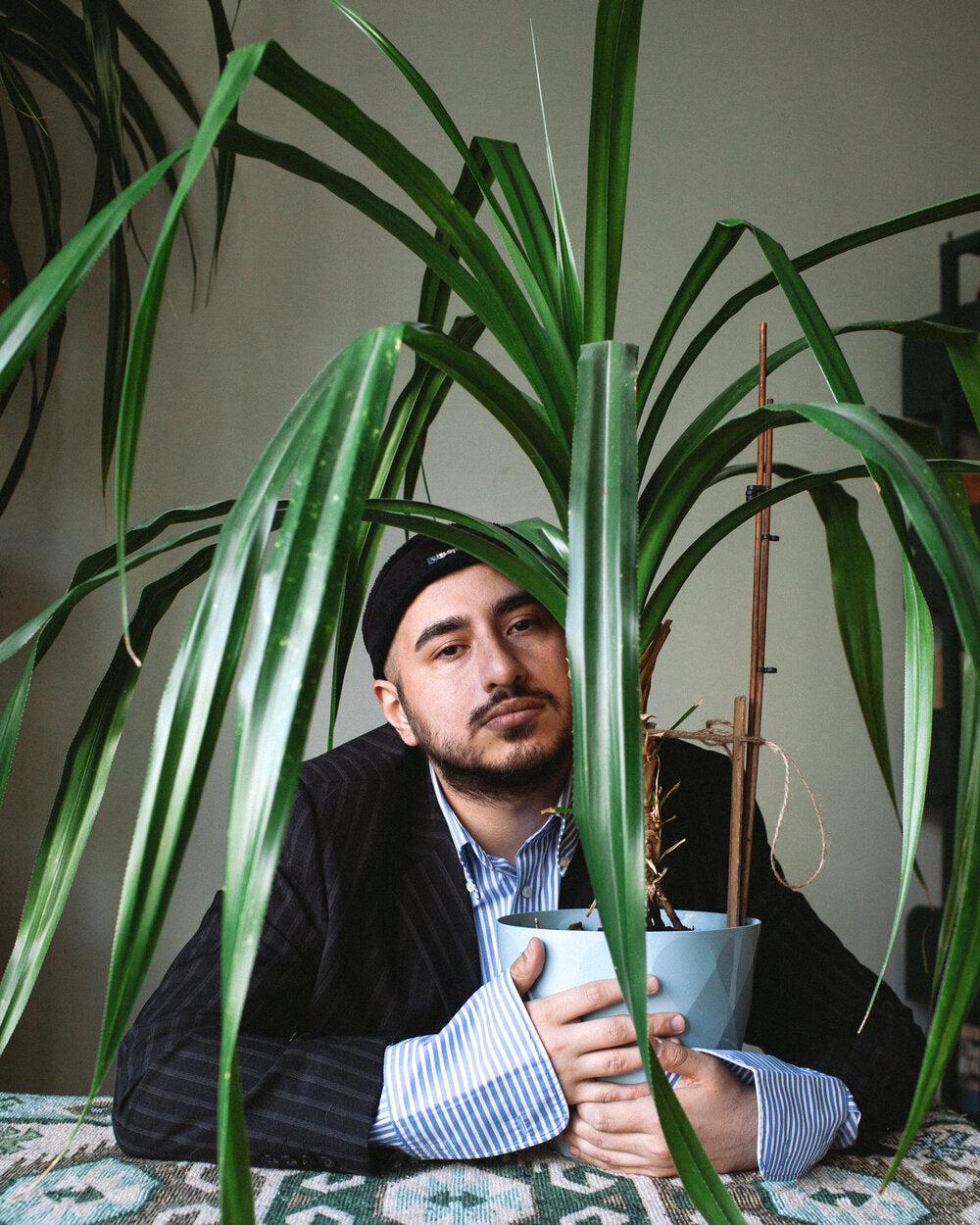
Agil Abdullayev
B. 1992
Agil Abdullayev’s practice is an ongoing inquiry into how the queer body archives and performs identity across multiple spaces, both physical and psychological. In a new series of paintings and recent video work Abdullayev explores the entanglement of queerness and public space in post-Soviet contexts. Their work offers intimate portrayals of private realities, respecting anonymity and foregrounding resistance to preconceived notions of masculinity and social restrictions in often conservative environments. Their award-winning three-channel film Radicals in Between Trees and Dicks (2024) follows individuals navigating ‘cruising’ culture in Azerbaijan and surrounding countries — societies where homosexuality remains taboo. Abdullayev has visited over thirty cruising locations, such as public parks or discreetly designated private sex spaces, documenting their own observations and recording the experiences of others in interviews, conversations, and visual recordings.
-
 Radicals in Between Trees and DicksVendor:Radicals in Between Trees and DicksAgil Abdullayev
- Regular price
-
$20,000.00 - Regular price
-
- Sale price
-
$20,000.00
-

 Pretties from South Caucasus (II)Vendor:Pretties from South Caucasus (II)Agil Abdullayev
- Regular price
-
$8,000.00 - Regular price
-
- Sale price
-
$8,000.00
-

 Pretties from South Caucasus (I)Vendor:Pretties from South Caucasus (I)Agil Abdullayev
- Regular price
-
$8,000.00 - Regular price
-
- Sale price
-
$8,000.00
-

 Pretties from South Caucasus (III)Vendor:Pretties from South Caucasus (III)Agil Abdullayev
- Regular price
-
$8,000.00 - Regular price
-
- Sale price
-
$8,000.00
-

 Samad Vurgun (Around 2)Vendor:Samad Vurgun (Around 2)Agil Abdullayev
- Regular price
-
$12,400.00 - Regular price
-
- Sale price
-
$12,400.00
-

 Samad Vurgun (Red Hoodie)Vendor:Samad Vurgun (Red Hoodie)Agil Abdullayev
- Regular price
-
$12,400.00 - Regular price
-
- Sale price
-
$12,400.00
-

 Narimanov Park (Around 4)Vendor:Narimanov Park (Around 4)Agil Abdullayev
- Regular price
-
$12,400.00 - Regular price
-
- Sale price
-
$12,400.00


Abdullayev’s practice is an ongoing inquiry into how the queer body archives and performs identity across multiple spaces, both physical and psychological. In a new series of paintings and recent video work Abdullayev explores the entanglement of queerness and public space in post-Soviet contexts. Their work offers intimate portrayals of private realities, respecting anonymity and foregrounding resistance to preconceived notions of masculinity and social restrictions in often conservative environments. Their award-winning three-channel film Radicals in Between Trees and Dicks (2024) follows individuals navigating ‘cruising’ culture in Azerbaijan and surrounding countries – societies where homosexuality remains taboo. Abdullayev has visited over thirty cruising locations, such as public parks or discreetly designated private sex spaces, documenting their own observations and recording the experiences of others in interviews, conversations, and visual recordings.

Echo Activism Collective
Echo Activism Collective is an art collective formed by Farhad Farzali (b. 1989) and Aiganym Mukhamejan (b. 1999).
Farhad Farzali is a sound artist, based in Berlin, whose practice merges traditional and marginal cultures with contemporary music and popular aesthetic forms. His work is rooted in anthropological research into the cultural contexts of Azerbaijan and neighbouring regions, documenting emergent forms of neo-folklore. Recent presentations include: Freeing the Voices at Kunsthaus Graz, Austria, curated by Zdenka Badovinac (2025); the Istanbul Digital Art Festival at the Atatürk Cultural Center, Istanbul (2024); the Islamic Arts Biennale, Jeddah (2023), the first alternative Azerbaijani pop-up pavilion at the Venice Biennale (2019), 16th Sharjah Islamic Arts Festival (2014). Solo exhibitions in Baku, Venice, Moscow, and Paris. Collections: Museum of Modern Art, Baku; the National Museum of Fine Arts of Azerbaijan; YARAT Contemporary Art Space.
Mukhamejan is based in Amsterdam and is a multimedia artist who employs ironic selfportraiture to reflect on Kazakhstan’s evolving cultural and political identity. Her work often engages with themes of tradition and modernity, feminist perspectives, and the socio-cultural transformations occurring in contemporary Kazakh society.


Echoactivism I


Primarily working with sound and moving image, Farhad Farzali combines traditional and marginal cultures with contemporary music and popular aesthetics. His practice is rooted in anthropological research into the neo-folklore of Azerbaijan and neighbouring regions. Echoactivism I (2025) is a collaborative project with Aiganym Mukhamejan (Echo Activism Collective) that comments on the paradox of hyper-connectivity and fragile human connection. The video documents a performance addressing the ecological crisis of the Caspian Sea, in which two performers that are positioned on opposite shores call to each other across the water; using iPhones and Bluetooth speakers as modern shamanic instruments.
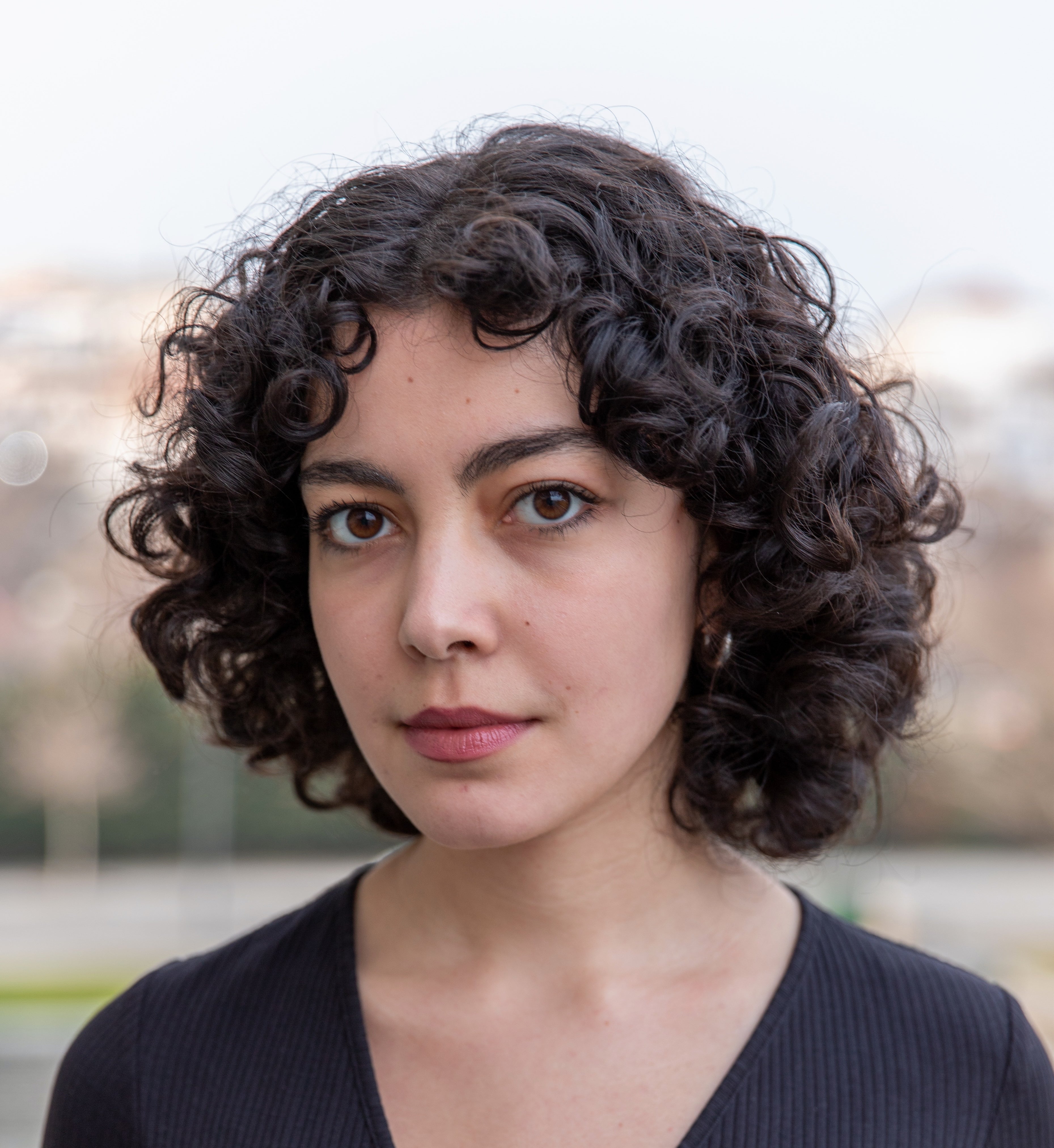
Ulviyya Iman
B. 2006
Ulviyya Iman (b. 2006) is a multidisciplinary artist from Azerbaijan currently based in Prague, Czech Republic. Exploring themes of local daily scenes, she often highlights gender roles in society. Iman garners inspiration from her trips to the regions of Azerbaijan, working both from memory and imagination. In her paintings of bright characters and food, Ulviyya explores the everyday iconography of contemporary society. As an emerging artist, Iman exhibits the potential to make a lasting impact on both the Azerbaijani and global art landscapes. Her work has featured in Art Dubai (2025) a group exhibition Once a Sea, YARAT, Baku (2025) and Her Art In Action, Gazelli Art House, Baku (2024).


Ulviyya Iman focuses her attention on Azerbaijan’s social structures and cultural norms, shifting between selfportraiture and observational viewpoints. Her canvases heighten emotional intensity within mundane settings, as seen in The End (2025), which depicts a meykhana, a millennia-old Sufi tradition of social gatherings where improvised verses are performed to percussive rhythms, drawing parallels with rap battles of contemporary hip hop culture. Iman was moved by a video of the final meykhana of Aydin Khirdalanli, a performer famed for his skill, and saw that it mirrored the composition of di Vinci’s The Last Supper. In Self Portrait, Red (2025), Iman confronts the viewer with a direct gaze and vivid palette, conveying a scene charged with psychological tension.
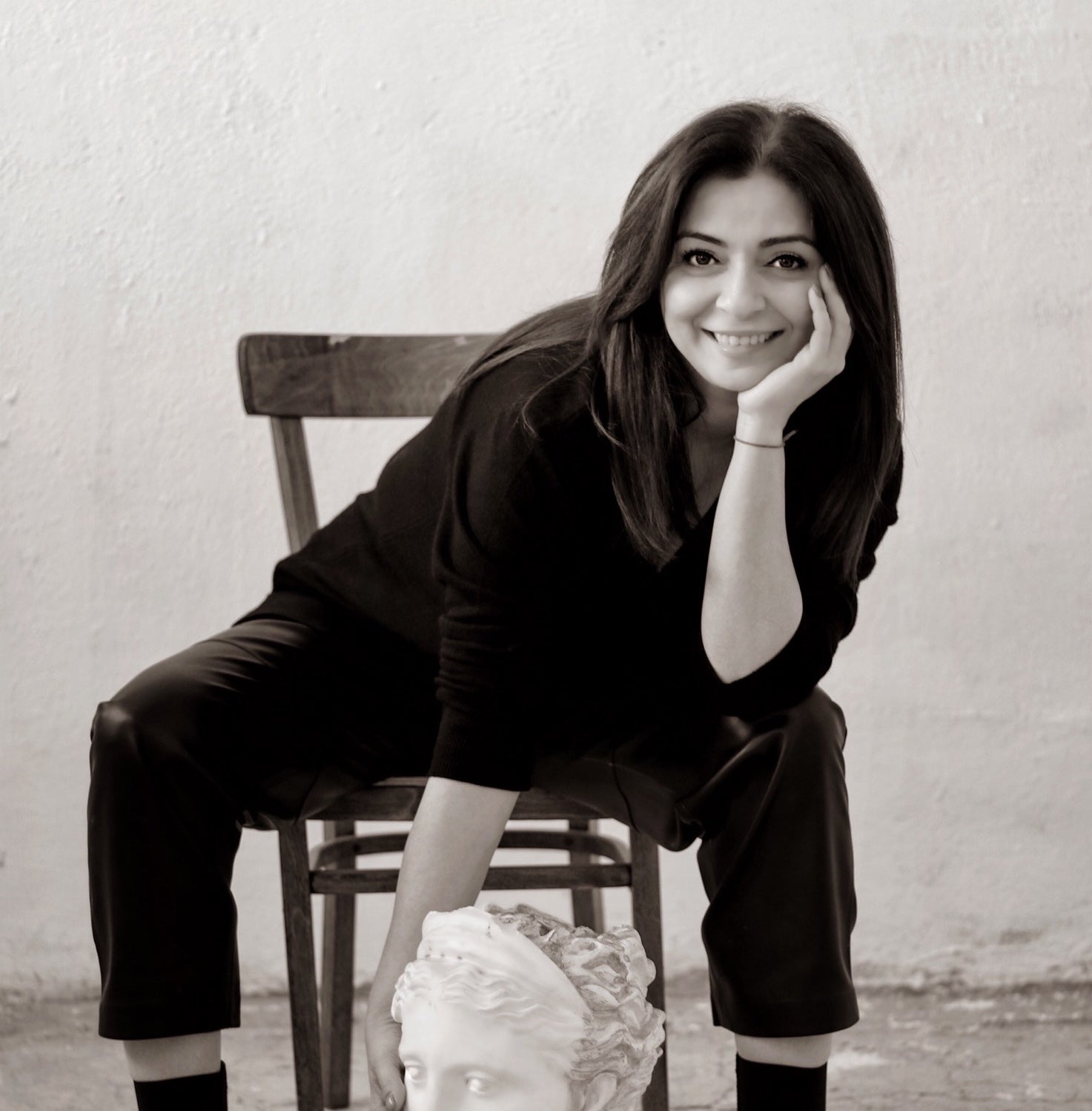
Ramina Saadatkhan
B. 1977
Ramina Saadatkhan (b. 1977) is a Baku-based artist who graduated from the Fine Arts Faculty in both the Azimzade Art School and the Azerbaijan State Academy of Fine Arts. Her practice spans painting, collage, and pop art, infused with abstract expressionist and pop art sensibilities. Engaging mythology, biblical narratives, and philosophical themes, she resists gendered or socio-cultural constraints, instead using bold, colourful imagery to explore archetypal energies, layered meanings, and encrypted visual forms. Drawing from Azerbaijani artistic heritage, Saadatkhan subtly references traditional carpet weaving and medieval miniature painting through her use of symbolism and structure. Her practice evolves through distinct phases, continually transforming while maintaining a recognisable and coherent visual signature style. Her work has featured in Art Dubai (2025) with Gazelli Art House and a group exhibition Spring Flow (2025), Gazelli Art House, Baku.
Ramina Saadatkhan’s painted collages offer a vision of inseparability between nature and human experience. Drawing on Nietzschean ideas of the “creature and creator” within, she depicts animals and foliage as expressions of inner states rather than external landscapes. Experiment Number 3 (2025) is in dialogue with the Biblical scene of The Garden of Eden and interprets themes of temptation and betrayal. Together with Pomegranate King (2025), both engage mythic imagery and archetypes, staging dynamic tensions between the human and the animal, feminine and masculine, order and chaos, creation and destruction.
-

 Pomegranate KingVendor:Pomegranate KingRamina Saadatkhan
- Regular price
-
$16,200.00 - Regular price
-
- Sale price
-
$16,200.00
-

 Smell as memoryVendor:Smell as memoryRamina Saadatkhan
- Regular price
-
$1,800.00 - Regular price
-
- Sale price
-
$1,800.00
-

 Union of Fire and WaterVendor:Union of Fire and WaterRamina Saadatkhan
- Regular price
-
$13,500.00 - Regular price
-
- Sale price
-
$13,500.00
-

 Experiment Number 3Vendor:Experiment Number 3Ramina Saadatkhan
- Regular price
-
$2,000.00 - Regular price
-
- Sale price
-
$2,000.00


Bringing together shared cultural memory, evolving values, and striking generational shifts, Abdullayev, Farzali, Iman, and Saadatkhan each develop distinct visual languages that speak to the complexities of life in and beyond the Caucasus. Through these intertwined perspectives, Tales from the Caucasus explores questions of place, identity, and belonging in a rapidly changing world.
Virtual Exhibition

Tales from the Caucasus Token
- Regular price
-
$0.00 - Regular price
-
- Sale price
-
$0.00
